
Ardmore Previous Residents Source Timeline
An Ardmore address history moves backward through distinct city and Carter County sources. The most direct chain begins with a present parcel and the Ardmore office of the Carter County Clerk, then adds Ardmore city directories for households, Sanborn maps for building and block context, newspapers for dated notices, and Ardmore court or probate material where the trail reaches territorial years. Each Ardmore source answers a narrow question. A deed speaks to a transfer or interest, while a directory can place a name near an Ardmore address for one year.
| Source | Years it covers | Where held | What it can show |
|---|---|---|---|
| Ardmore territorial court and marriage material | 1890 to 1907 context; Carter marriages from April 1895 | OHS guides, Research Center, and Carter County Court Clerk | Probate, guardianship, citizenship, marriage, and estate clues |
| R.L. Polk & Co. Ardmore directories | 1904 to 1960 verified | OHS Research Center and directory search | Annual street, householder, business, and occupation snapshots |
| Ardmore Carter Clerk scanned instruments | January 1908 forward, as stated by portal | Carter County Clerk and OKCountyRecords | Deeds, mortgages, liens, plats, and recorded interests |
| Ardmore Carter Clerk name index | November 1998 forward, as stated by portal | OKCountyRecords Carter search | Faster party and instrument searching with real-time additions stated |
| Ardmore Sanborn and Clarkson maps | Ardmore examples for 1902 and 1913 | OHS, Gateway, and Library of Congress | Footprints, lot and block context, uses, streets, and landmarks |
| Ardmore Daily Ardmoreite and yearbooks | Newspaper begins 1893; yearbooks 1905 into the 2000s | Gateway and Ardmore Public Library | Notices, obituaries, school-era names, and community context |
Begin an Ardmore search with the source nearest to the target year, then work out in both directions. The online name index is not a complete substitute for earlier books, office research, microfilm, or an archival request. Note: Keep owner, occupant, mailing address, situs address, and source date as separate facts.
Ardmore Address Records Start With a Parcel
Normalize the current Ardmore address before looking for past residents. The ACT DataScout Carter property search supports owner name, Ardmore property address, subdivision, parcel components, classification, and sale-date searches. The Ardmore and Carter County GIS pages add map and layer context. Record the Ardmore parcel or tax identity, subdivision, lot and block or legal description, and the situs address exactly as the records display them. A postal address alone may not be the wording used in an Ardmore deed.
Use the Ardmore GIS mapping page or the Carter County GIS page to orient the Ardmore parcel. The research did not capture every live parcel-card field, so do not assume a viewer supplies historic ownership or an occupant list. Its role is to connect the Ardmore location to parcel geometry, plat, zoning, or related address layers.
- Write the full current Ardmore address, including directional suffix.
- Find the Ardmore parcel, subdivision, block, lot, or legal description through assessor and GIS sources.
- Save the current owner field as a dated Ardmore tax-roll fact, not as proof of residence.
- Take those identifiers to the Ardmore clerk's recorded-instrument search.
Ardmore Records: 1908 Image and 1998 Index
The Ardmore Carter County Clerk portal creates two practical research eras. It states that scanned images begin in January 1908, while indexed data begins in November 1998. The portal also states that new records are added in real time and that its book list contains 7,588 books. These statements help route an Ardmore search, but they do not mean every record between those dates is fully indexed or that every image can be treated as complete.
Use the OKCountyRecords Carter search for an Ardmore party, instrument, date, book or page, and legal-description search. For an earlier or incomplete online trail, contact the Carter County Clerk about records, books, or copy access. The Ardmore portal lists basic and advanced search routes, book lists, plat maps, fees, and e-recording links. It is a strong starting point, not a promise that an older Ardmore transfer can be found by one name search.
Note: An Ardmore online index miss may mean the older book or image has a different access path, not that a transfer never occurred.
Ardmore Deed Chain Records
An Ardmore chain of title is the sequence of recorded transfers or interests tied to the same property. In a current deed, the grantee receives an interest and the grantor conveys it. The prior deed reference, book and page, instrument number, or stable legal description can lead backward. Search name variants, estate names, and corporate names. Compare lot, block, addition, section, township, range, and recording date before treating two results as the same Ardmore property.
- Use the assessor and GIS records to capture the parcel and legal-description details for the current Ardmore address.
- Search the current owner's name and the legal description in the Ardmore Carter Clerk portal, then record the instrument number, book or page, date, parties, and any prior reference.
- Identify the prior Ardmore transfer by searching the seller, prior reference, or the same lot and block terms.
- Repeat the comparison backward through Ardmore records, keeping mortgages and releases on their own line so an encumbrance is not mistaken for ownership.
- When the online index reaches its limit, request or inspect the older Ardmore record path through the clerk, OHS, or available microfilm.
- Grantor
- The party conveying an interest in a recorded instrument.
- Grantee
- The party receiving an interest in that instrument.
- Chain of title
- The connected series of recorded transfers or interests for one property.
- Legal description
- The lot, block, addition, or survey wording used to identify land. It can remain steadier than a street address.
A recorded Ardmore transfer can identify a prior owner or interest holder. It does not by itself identify previous residents. This distinction is central when an Ardmore search shifts from title history to household history.
Ardmore Household Records Between Transfers
Use the Polk directories between transfer dates to look for household or business entries at an Ardmore address. The verified run spans 1904 to 1960, and the 1922 directory notice says its street and householder material covered 62 pages. That section can bridge an Ardmore transfer date when a deed holder did not occupy the property. It can also reveal a business use or a different spelling worth testing in newspapers.
Pair the directory year with census, map, obituary, or yearbook evidence as the era allows. The collections themselves, their access points, and how an entry reads are detailed on the Ardmore City Directory page. No named local criss-cross run was verified, so ask the Library or OHS reference desk for a specific reverse-directory volume rather than citing one as available.
- Open the Polk volume nearest the transfer year and capture the exact address and name.
- Check the street or householder material for that Ardmore year when it is present.
- Compare the finding with the census period, allowing for changes in township and city boundaries.
- Use an obituary, newspaper, yearbook, or deed only to test the date and identity.
Use an Ardmore flow: address and parcel to deed transfer, then directory year, then a census or local source that can test the date and name. A directory is an annual snapshot, not proof of title or a complete count of occupants.
Note: Write the source year beside each Ardmore household finding so an occupant lead is not mistaken for the date of a deed.
Ardmore Records on Sanborn Maps
Sanborn and Clarkson fire-insurance maps give the physical setting for an old address. OHS describes more than 300 Sanborn maps from 1900 to 1960 and more than 1,600 Clarkson maps from 1892 to 1931. The Gateway Clarkson collection contains 1,674 items and can be browsed for Carter County. For Ardmore, the Library of Congress lists a February 1902 item with 15 sheets and a July 1913 item with 27 sheets.
Use the OHS insurance-map guide to locate the map collections and their Research Center path.
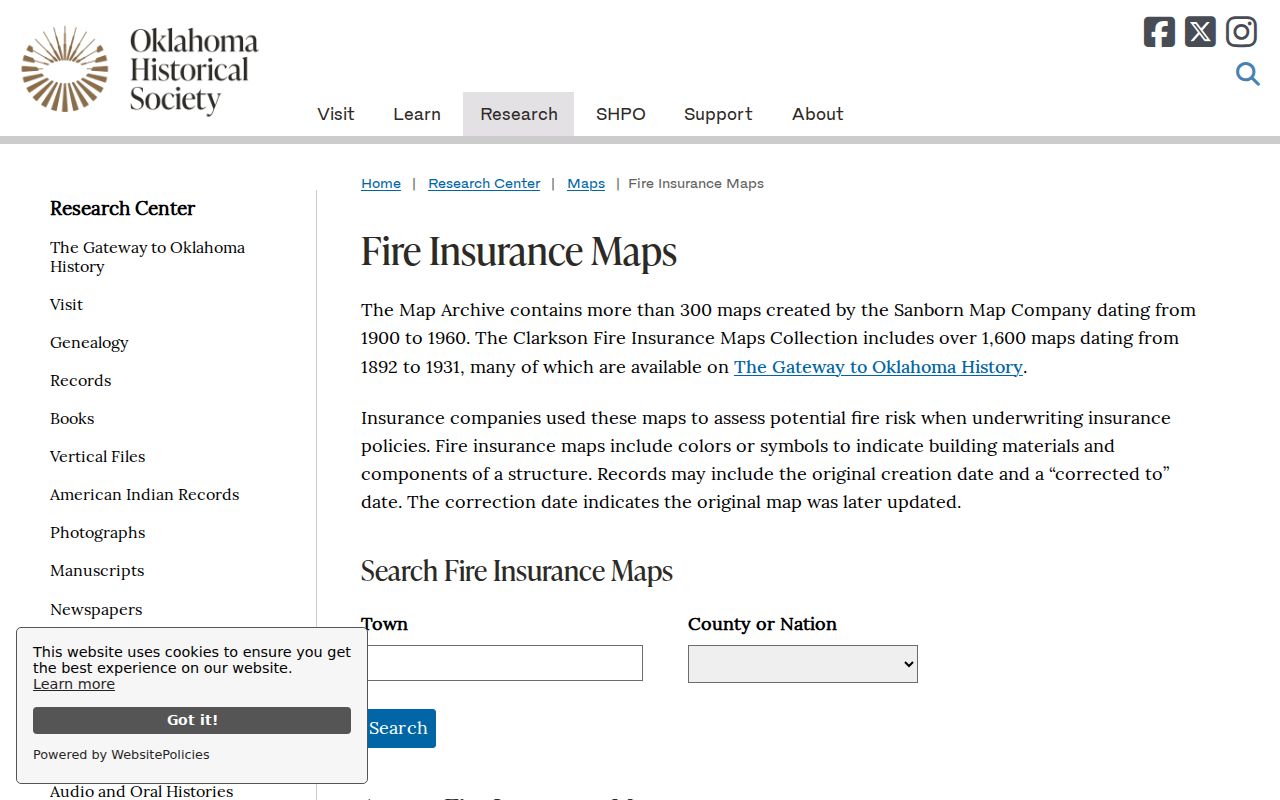
A map can show a building footprint, use, street, lot, or landmark. It cannot name an occupant on its own, so it belongs beside a directory, deed, or newspaper source.
The Gateway Clarkson Fire Insurance Maps collection supplies a digital way to browse the wider map set.
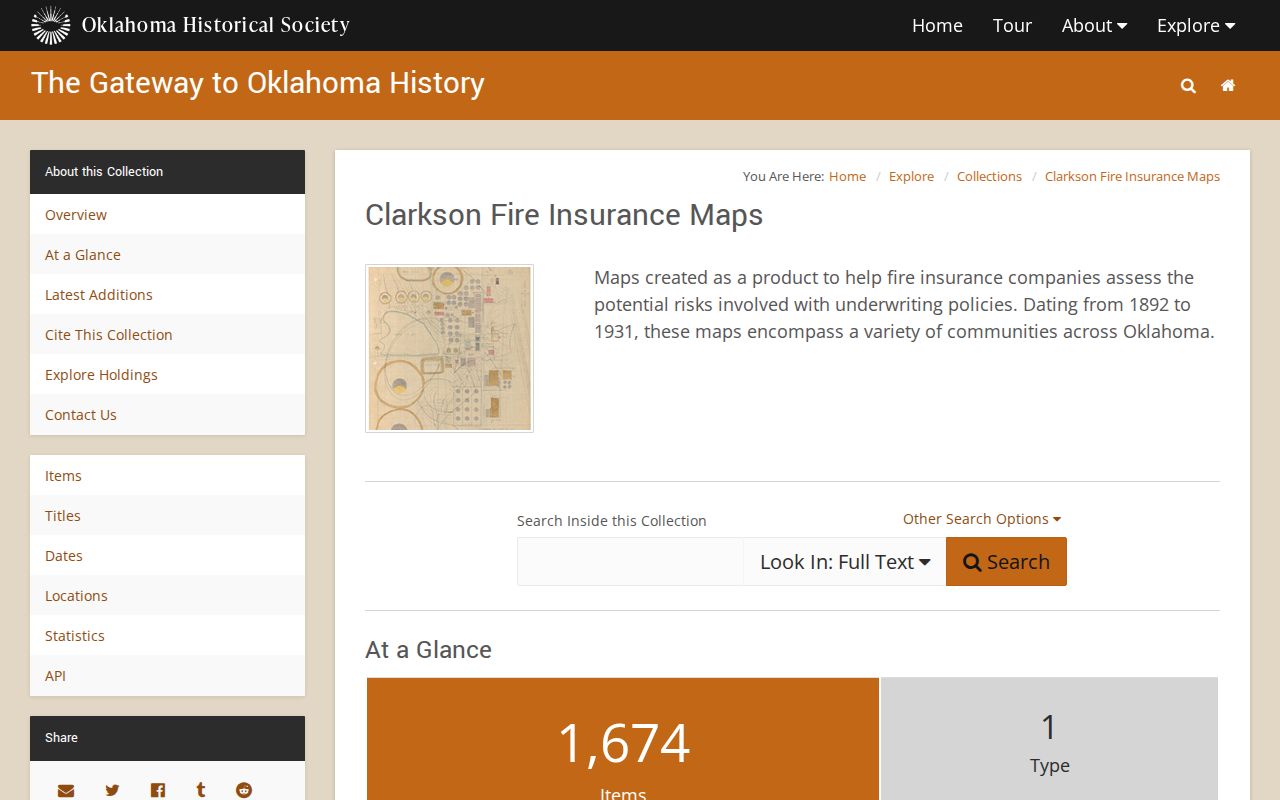
Use the map's date and sheet together with the directory year. That pairing can explain why a street number, building use, or block context needs more than one historical interpretation.
Territorial Records Around an Ardmore Address
Before Carter County's 1907 formation, Ardmore research can move into Indian Territory court and archival material. OHS notes that the earliest county land records generally begin in November 1907 because judicial recording-district books were generally not preserved by state counties. Its territorial guide identifies Ardmore court series that include administrator, guardian, probate, testamentary, citizenship, naturalization, attorney, and court-journal material. These can offer names and relationships when the deed chain does not extend far enough.
Marriage records add another local route. The OHS Carter territorial marriage guide identifies 12 Carter County volumes spanning April 1895 through February 2, 1934. Originals are held by the Carter County Court Clerk, while OHS offers microfilm and Mary Kinard index support at the Research Center.
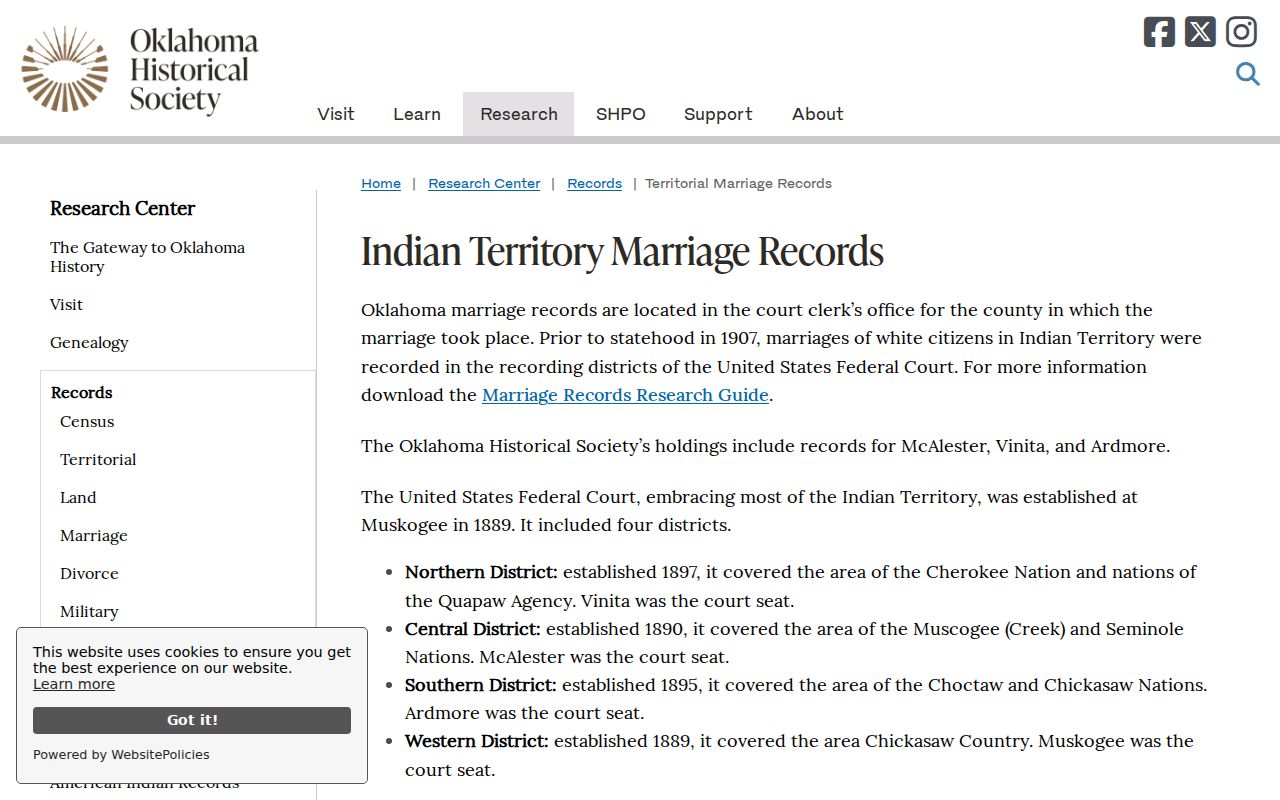
Marriage, probate, or guardian evidence may corroborate a family connection or date. It does not place a person at a particular Ardmore address unless the underlying record does so.
Note: Territorial records can add names and relationships to an Ardmore trail, but location still depends on the text of the underlying record.
Ardmore Record Cross-Checks in Print
The Daily Ardmoreite collection begins in 1893, though digitized coverage varies by decade. Search it around an Ardmore transfer, a map year, an obituary date, a business name, or an institution. OCR can miss names in advertisements, columns, and poor scans, so read nearby page images and adjacent issues. The Ardmore Public Library also identifies searchable Craddock and Harvey-Douglas obituary resources and Bill Hamm Carter County burials as local historical leads.
For a pre-statehood family question, probate, administrator, guardian, or testamentary records may be more useful than a modern deed index. Put the source date beside every note. The 1895 fire and the 1915 explosion are valid Ardmore date anchors for newspaper research, but neither should be used to assume a particular document was lost or a particular person was present.
Ardmore Address Records: Owner or Occupant?
Owner, taxpayer, mailing address, situs address, and occupant are different Ardmore facts. The assessor can show a tax identity and property address. The recorder ties parties to an instrument and legal description. A directory can place a household or business at an Ardmore address for its publication year. A map can show a building or lot. Keep each claim attached to the source that supports it, especially when a property was held by an estate, trustee, company, or an owner who lived elsewhere.
Current Ardmore voter data is not a lawful block-by-block substitute for this work. Oklahoma's voter portal requires a first name, last name, and date of birth for an individual lookup, while Election Data Warehouse access has eligibility and use rules and excludes restricted and ACP addresses.
Ardmore Records for Missing Years
Document the unanswered year instead of filling it with a guess. Research did not verify an Ardmore printed directory before 1904, a final Polk year after 1960, a local titled house-history guide, a public permit database, a street-renumbering chronology, or a complete reverse-directory run. The appropriate next step may be a specific Ardmore request to the Clerk, a Library or OHS reference question, or a search of territorial and probate materials.
Statehood is another real boundary. Early title questions may need court, abstract, territorial, or archival research because the county's own records begin near that transition. That limitation is useful information: it helps keep an Ardmore previous residents search tied to records that can actually answer it.
Note: Preserve an Ardmore research gap as a dated finding and return to the clerk, library, or archives with a specific record question.