
Finding Ardmore Residents
Ardmore has no single official roll of every resident. The most useful starting point changes with the question. An owner or parcel question belongs with the Carter County Assessor. A recorded transfer belongs with the County Clerk. A current voter question has its own state process, and a past household may appear first in a Polk directory, yearbook, obituary, or newspaper. Keep the city and county distinction in view: Ardmore is the Carter County seat, but county offices also serve places outside city limits.
Use two independent records before treating an Ardmore name as confirmed. An Ardmore tax roll can identify an owner, but not necessarily a current occupant. A deed records an interest in land, while a city directory is a dated household snapshot. A court, voter, vital-record, or archive hit can be a useful lead, yet each has its own access limits and date range.
- Start with the exact name and either Ardmore or Carter County. Note initials, maiden names, aliases, and the date range given in an Ardmore record.
- For an Ardmore property question, check the assessor record and retain the parcel, property address, and subdivision details separately.
- Use the recorder index for parties to an Ardmore deed or other instrument, then compare the legal description and recording date.
- For an Ardmore historic household, look for the same name or address in the library and Oklahoma Historical Society collections.
- When an Ardmore online source is incomplete, ask the actual custodian for a focused record by name, address, parcel, case number, and date range.
Ardmore Resident Record Keepers
Three offices form the core of an Ardmore local-record search. The County Clerk holds recorded instruments and plats. The Assessor connects owners and addresses to the current tax roll. The Election Board maintains voter-registration channels under state rules. Each Ardmore record answers a narrower question than a general name search, which is why the office name matters as much as the person’s name.
Carter County Assessor
25 A Street NW
Ardmore, OK 73401
580-223-9594
Carter County Election Board
25 A Street NW, Suite 100
Ardmore, OK 73401
580-223-5290
Office details can change, especially suite assignments and live portal access. Confirm the current office page before visiting or making a request.
Ardmore Parcel Search Fields
The ACT DataScout interface is the clearest route when an Ardmore address or owner is already known. It separates Ardmore property identity from the person’s mailing or residence information. Search by owner name, property address, subdivision, parcel ID, sale date, or classification. A parcel search is split into Control Map, Group, and Parcel components, so a partial address search may be simpler when the parcel format is unknown.
| Search control | Use for | What to retain |
|---|---|---|
| Owner name | Property linked to a known person or business | Property address and parcel identity |
| Property address | A specific Ardmore location or street | Parcel, subdivision, class, and sale-date context |
| Subdivision | Lots recorded under a development name | Lot or block clues for the deed search |
| Control Map / Group / Parcel | An exact tax-roll identifier | The property record to compare with GIS and deeds |
The Carter property-search interface shows the property-search starting point for an Ardmore parcel inquiry.
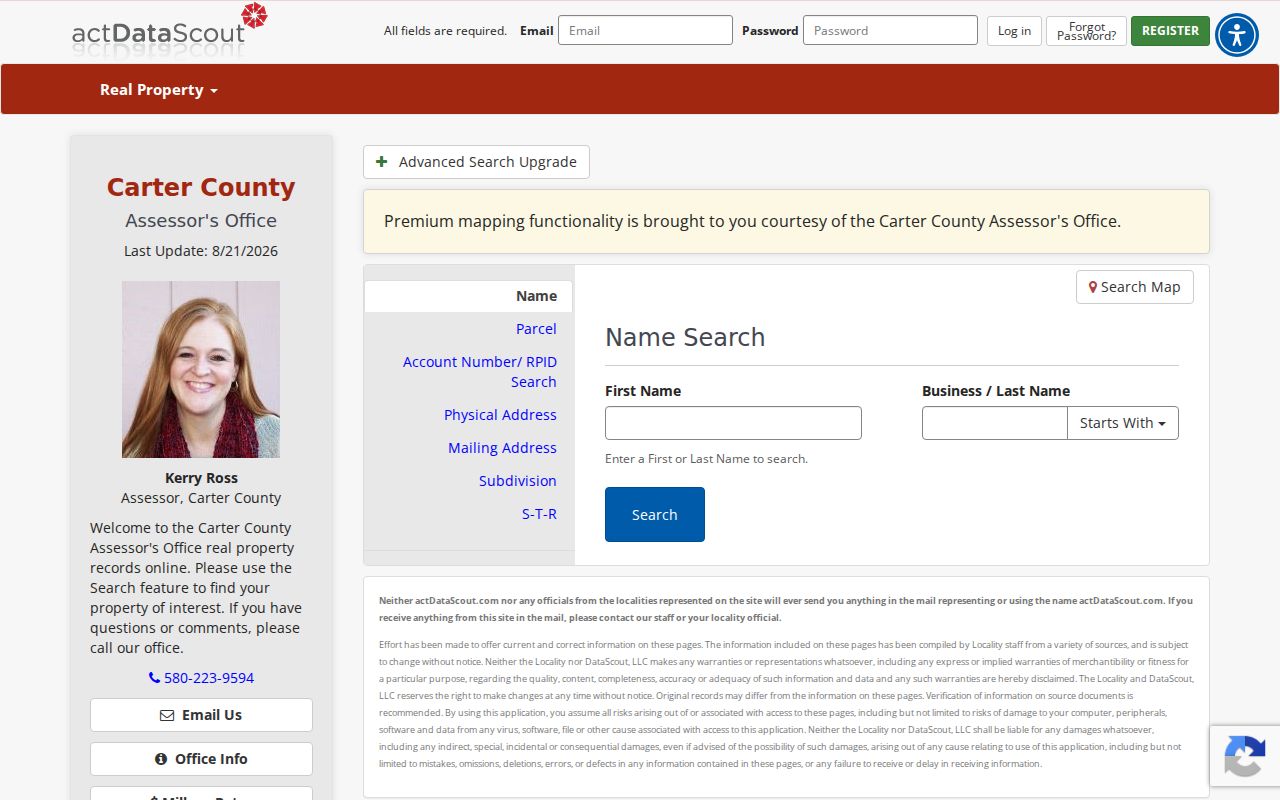
Use the returned parcel as a record key, then compare it with the legal description in a recorded instrument rather than assuming the tax record proves occupancy.
Note: An Ardmore assessor entry identifies a taxed parcel and owner context, not every person who may be connected with that address.
Carter County Deed Names
The Carter County Clerk’s online index is useful for people named in Ardmore deeds, mortgages, liens, plats, easements, and related filings. The portal states that indexed data begins in November 1998, while scanned images begin in January 1908. Those dates describe the portal’s reported access layers, not a guarantee that every earlier document or name is searchable online. The book list reports 7,588 books, so an older Ardmore search may need the clerk, a courthouse visit, or archival help.
Search a party or business name first. Advanced controls also use party type, book and page, instrument number and type, recording dates, and legal-description parts such as addition, block, lot, section, township, and range. A grantor transfers an interest; a grantee receives one. Neither label by itself proves that someone lived at the property.
The Carter County deed index illustrates the starting point for party and instrument research.
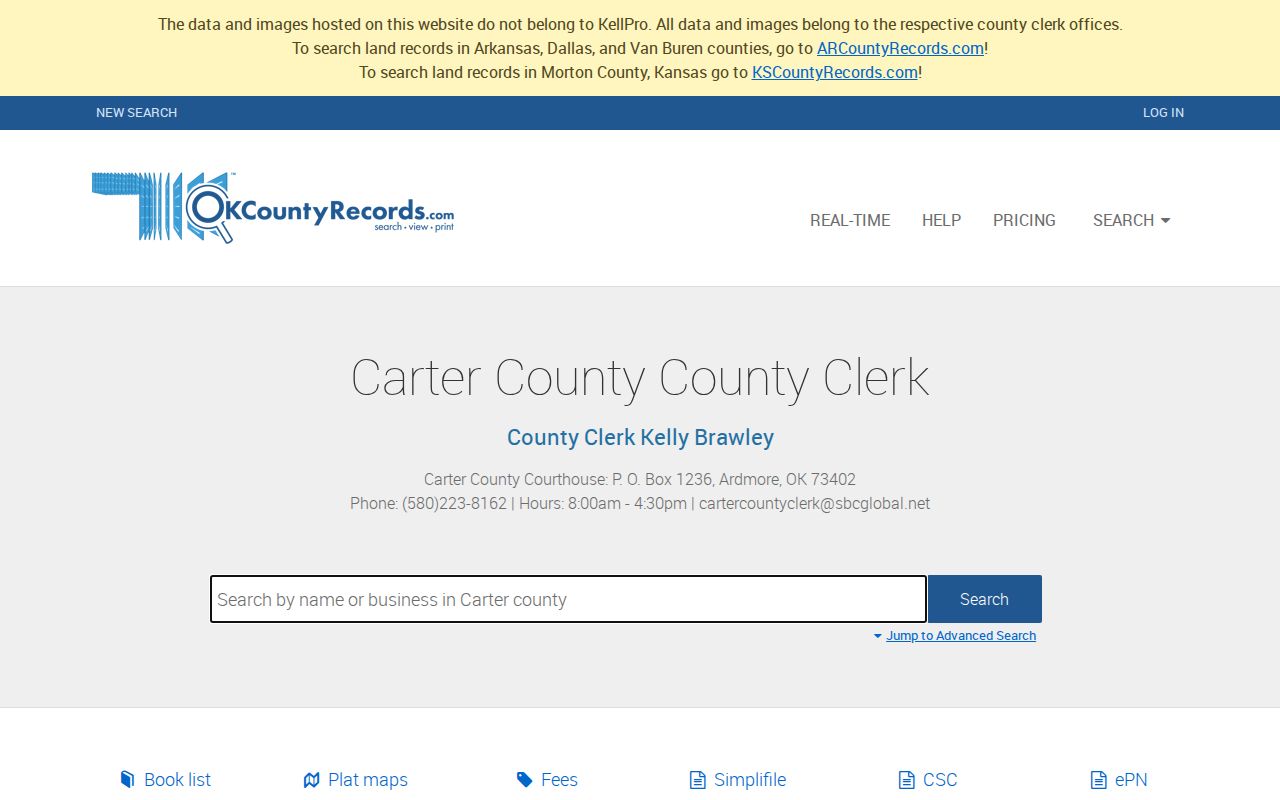
Record the instrument number, recording date, book and page, and legal description before moving backward to an earlier party or document.
Ardmore Voter Lookup Limits
Oklahoma’s voter portal is a current-registration tool, not a browsable list of Ardmore households. Its registered-voter lookup requires first name, last name, and date of birth. The returned result can help confirm current Ardmore election information such as registration or polling details when the requester may lawfully provide the matching information. It should never be treated as a public date-of-birth directory.
Broader voter-list access belongs to the Oklahoma Election Data Warehouse and is limited by requester eligibility, account and use rules. Restricted Records and Address Confidentiality Program participants are excluded or protected. That means a missing voter result cannot establish that a person is absent from Ardmore, and a result does not establish every person at an address.
The Oklahoma Voter Portal displays the controlled lookup route used for this part of the search.
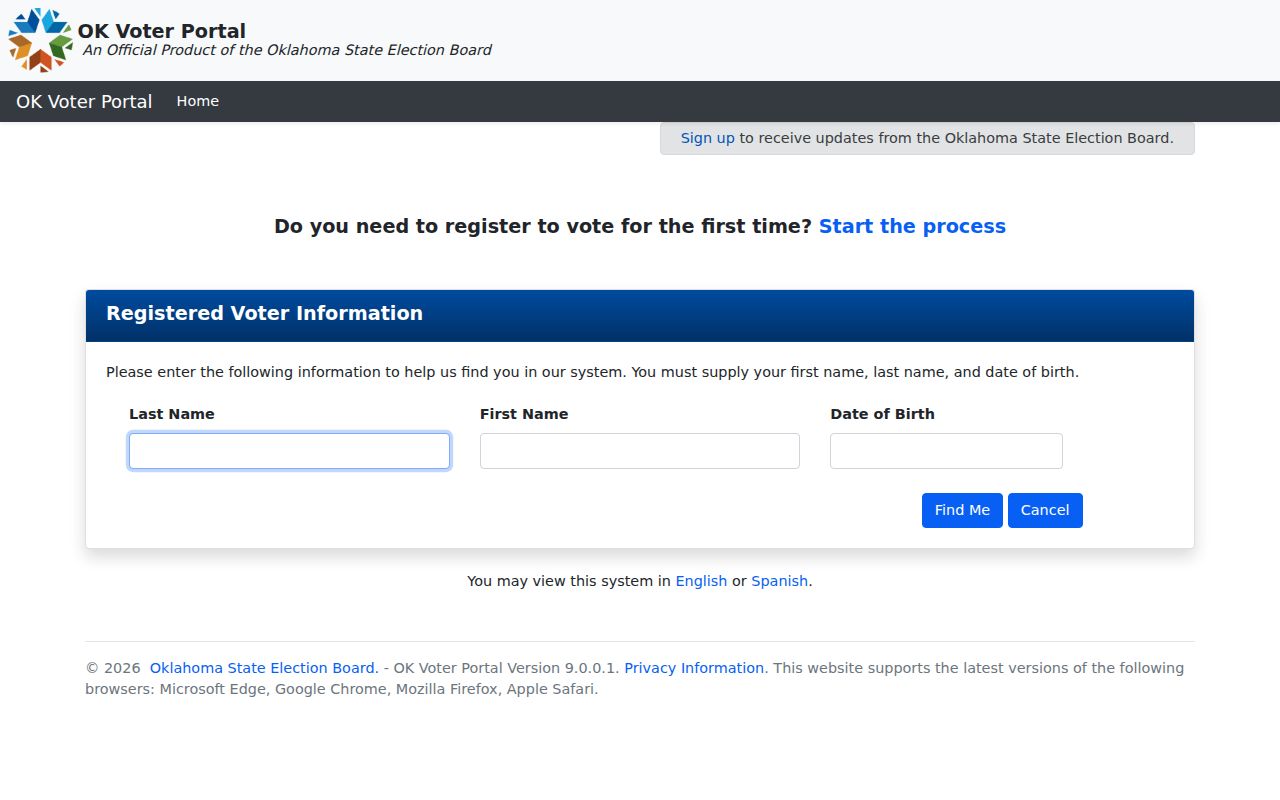
For a same-name match, compare jurisdiction, source date, and another independent record before relying on the result.
Note: A missing Ardmore voter result may reflect privacy protections, matching limits, or a different jurisdiction rather than an absence from the community.
Ardmore Court Record Names
District-court matters are routed through OSCN where county coverage is available, with ODCR listed for non-OSCN access paths and the Carter County Court Clerk as the local Ardmore fallback. The live party-name search was protected during research, and OSCN warns that availability depends on county computerization and scanned dockets. A case number is usually more reliable than a broad same-name query. Ardmore Municipal Court is a separate city court with its own clerk and request path.
A docket is the court’s running case record. It can show a caption, filings, events, and disposition where access is available. It is not proof that a same-named party is the person being sought. Confirm the county, case number, date, and case type with the relevant clerk if a record is missing or unclear.
The Oklahoma court-records search shows the statewide entry route for Carter County case research.
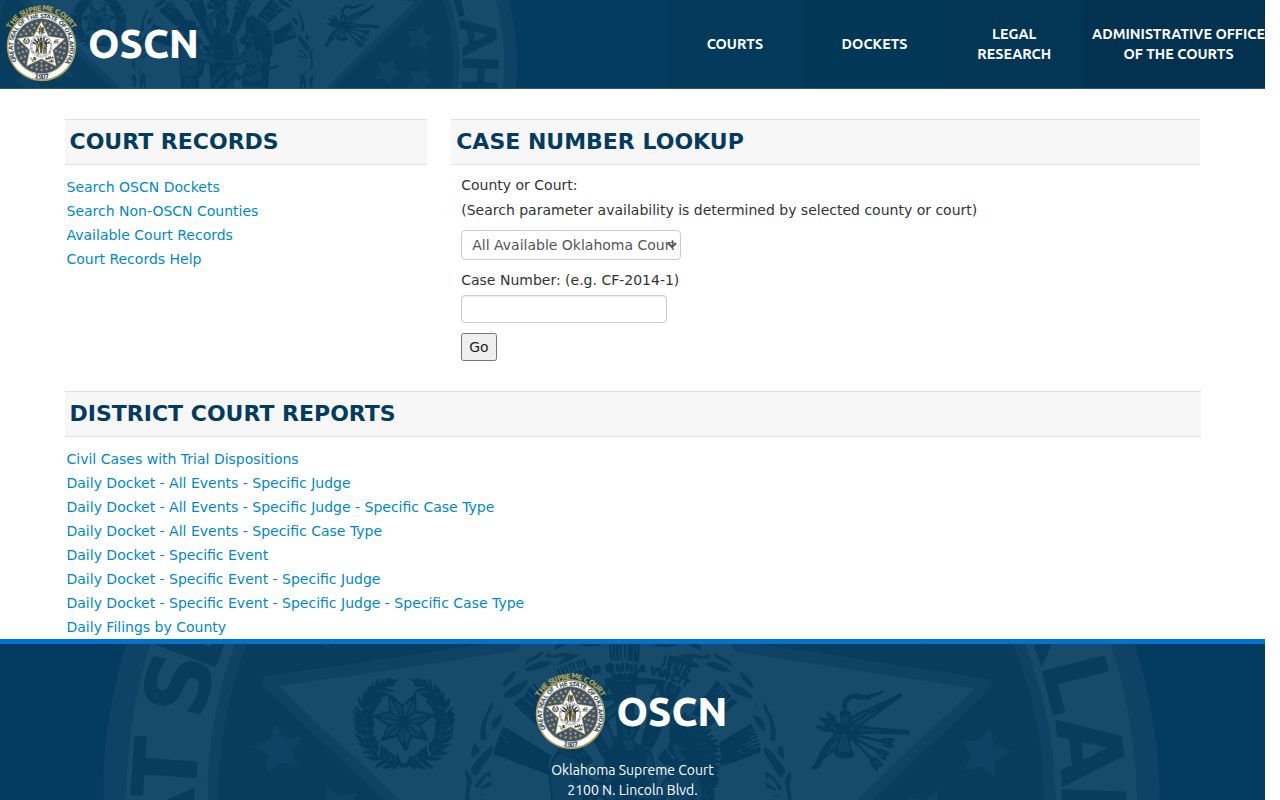
Use the court source to verify a specific case, not to merge several people who happen to share a name.
Ardmore Vital Record Routes
Birth, death, marriage, and divorce records do not all travel through the same Ardmore office. Oklahoma State Department of Health Vital Records issues certified birth and death records, while the free OK2Explore index is a finding aid rather than a certificate. Newer certificates require eligibility, identification, and fees. An Ardmore researcher should keep an index result separate from a certified record. Birth records become public without proof of eligibility at 125 years; death records do so at 50 years under the cited Oklahoma confidentiality rules.
Marriage records are held by the Carter County Court Clerk, and divorce files are court records where filed. Oklahoma Historical Society guidance and local historical collections can help route a historic marriage search, but they do not replace the county’s original custody. Keep an index hit and a certified record distinct, because they serve different purposes.
Note: An Ardmore vital-record index can be a lead, while eligibility and identification rules control access to a newer certified copy.
Current Ardmore Resident Sources
Several current sources act like partial resident directories, but each is narrow. The assessor and treasurer expose property or tax connections. The recorder indexes parties to land instruments. The voter portal has an exact-match current-registration function. The city staff directory is only for public employees and department routing. Ardmore’s research did not locate an official neighborhood-association or homeowner member roster, so civic and business lists must not be represented as household lists.
| Ardmore source | People or place signal | Custodian | Access boundary |
|---|---|---|---|
| Ardmore property and tax roll | Owner, property address, parcel, tax context | Carter County Assessor / Treasurer | Current property information, not occupancy proof |
| Ardmore recorded-instrument index | Grantors, grantees, instrument details | Carter County Clerk | Online index and image access have different date layers |
| Ardmore registered-voter information | Current voter and polling information | Oklahoma Election Board | Exact-match portal and restricted-record rules |
| Ardmore staff directory | City office contacts and public roles | City of Ardmore | Municipal employees only |
The Ardmore staff directory is especially useful for finding the department that holds a city record.
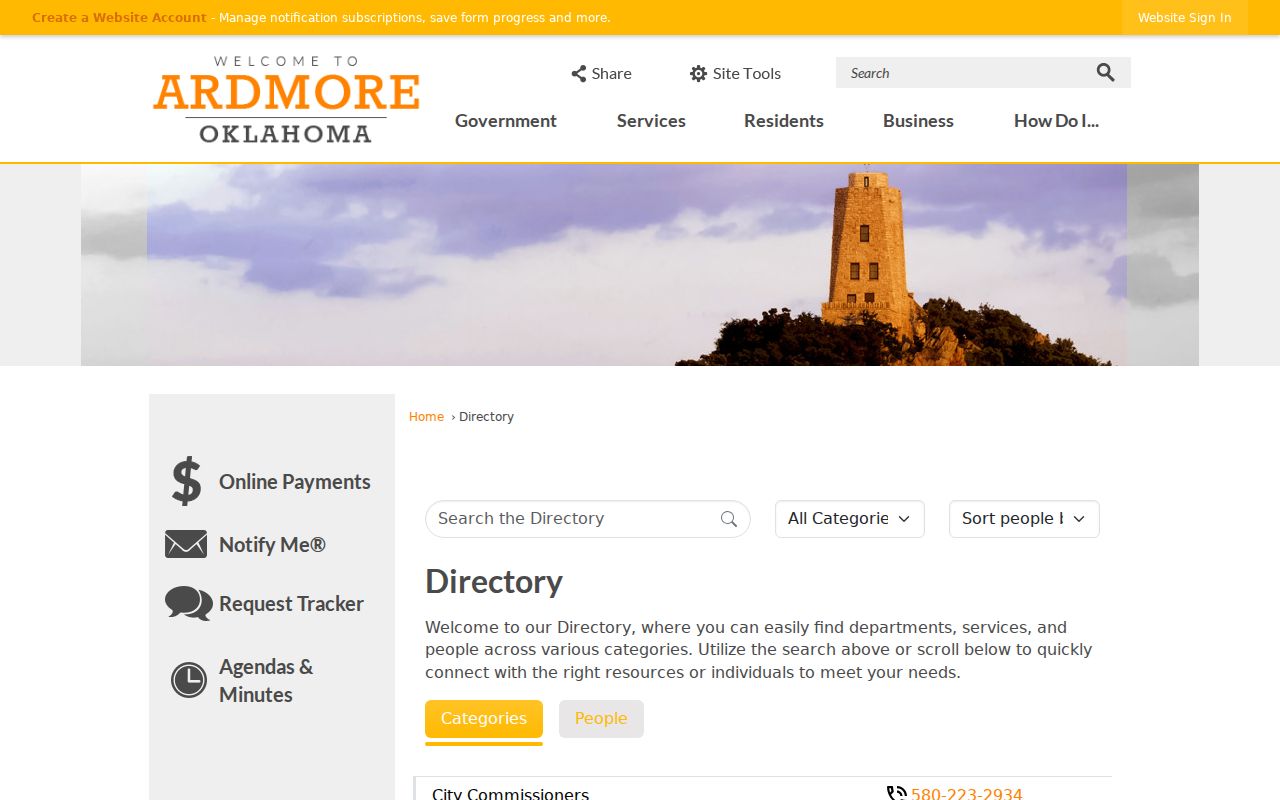
It identifies record custodians by category, first name, or last name, but it is not a list of Ardmore residents.
Note: Ardmore’s staff directory routes a request to the right city department but does not establish a person’s private home address.
Ardmore Address Record Keys
One Ardmore address can appear in several systems under different identifiers. Comparing them avoids a common error: treating a mailing address, a physical property address, and a deed’s legal description as interchangeable. The street-by-street sequence is handled in the Ardmore street directory; the short version is to carry the parcel and legal description forward with the street address.
- Parcel
- A tax-roll identifier for a piece of property, used by the assessor and often by GIS.
- Situs address
- The physical property address. It may differ from an owner’s mailing address.
- Legal description
- The lot, block, addition, or survey description used in recorded land instruments.
- Index
- A searchable finding tool. It points to a record and is not necessarily the image or certified copy itself.
These Ardmore terms help keep an ownership trail separate from a current-residence claim. They also make a focused request to the clerk or assessor much easier to route.
Note: Keep each Ardmore address form beside its source, because an assessor parcel, postal label, and deed description can differ.
Ardmore Record Sources Compared
Official Ardmore and Carter County records are narrow by design. They identify the custodian, record date, and the kind of evidence returned. An Ardmore commercial people-search category may combine public and purchased material, but a result can be old, incomplete, paid, or unclear about its source date. Use a source that answers the actual question, then retain the record date and access limit with the result.
| Ardmore research route | Strength | Limit to keep visible |
|---|---|---|
| Ardmore assessor, clerk, court, election, or city custodian | A defined record type and official contact path | Each source covers only its own parcel, instrument, case, voter, or city record. |
| Ardmore Library, Oklahoma Historical Society, or Gateway collection | Dated historical context and original-source guidance | Coverage, indexing, and image access vary by year and collection. |
| Commercial directory category | A possible starting lead when an independent source is available | Do not treat compiled data as proof or use it to rebuild restricted information. |
For an Ardmore identity question, the best comparison is always a second source from a different keeper. That separates a useful lead from a verified, dated record.
Ardmore Open Records Requests
When a city record has no public search interface, use Ardmore’s Open Records request route and name the likely custodian, record type, address or person, and date range. The Ardmore city clerk is the official keeper of the city’s records and handles Open Records compliance. Community Development, police records, municipal court, cemetery, and board materials each have different access routes or exemptions, so a broad request is less useful than a focused one.
Oklahoma’s Open Records Act, 51 O.S. §§24A.1–24A.31, provides the state framework. Ardmore’s local guidance asks for a written, specific request and describes ordinary copies at $0.25 per page, with possible search or legal-review charges for commercial or disruptive requests. Those local charges are not a fee schedule for every Carter County office.
The Ardmore Open Records page shows the city request entry point and Request Tracker.
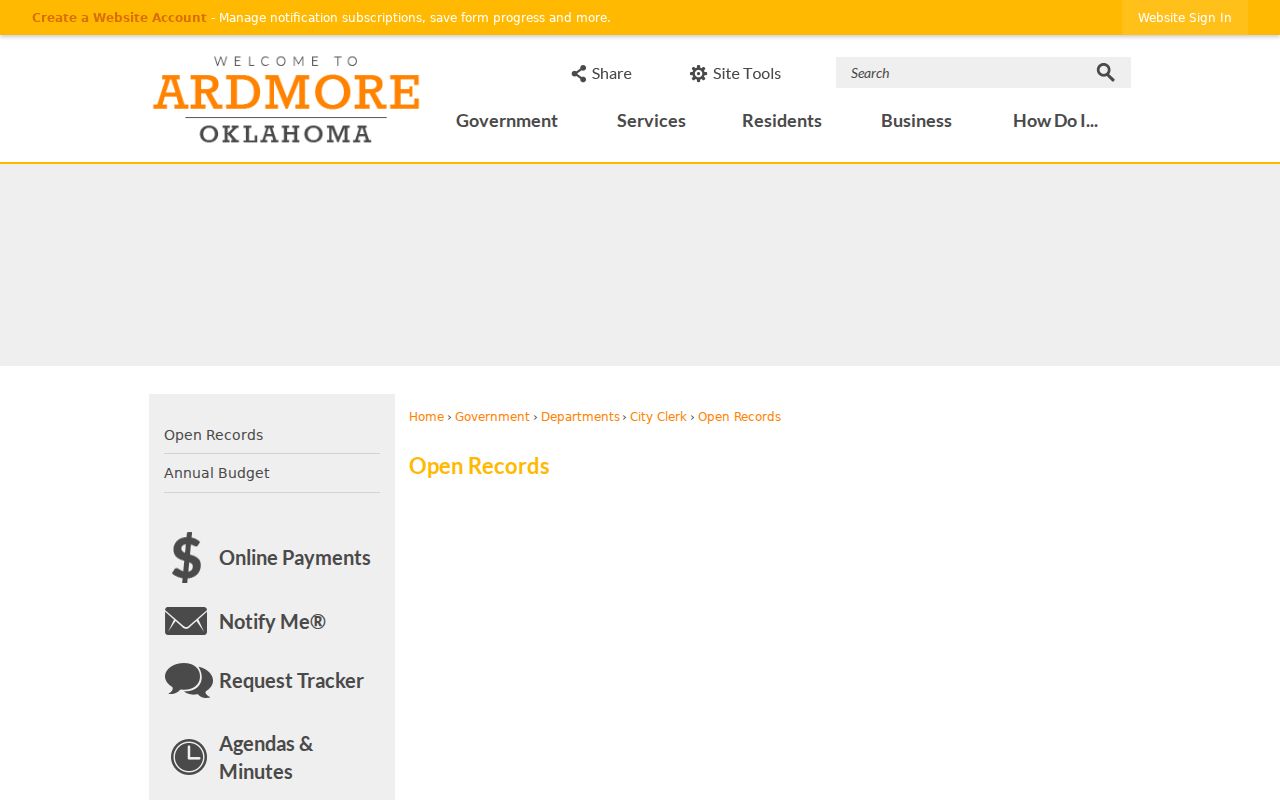
Ask for inspection before copies when that is practical, and ask the custodian to identify the basis for any redaction.
Note: A focused Ardmore request with an address, record type, and date range is easier for a custodian to review than an unlimited request.
Ardmore Custody Status Tools
Carter County Sheriff’s Inmate Search lists people currently in custody, booking date, charges, and additional information, with a name search. Oklahoma VINE provides status notifications, while state and federal systems cover separate custody populations. These are volatile Ardmore-area records. A booking entry is not a conviction, and a release or transfer can change after a result is viewed.
Use a case number, agency, booking date, and official contact to resolve a possible match. Sheriff-held reports begin with a phone request for the applicable form, and research notes say completed records are not faxed or emailed. A status search should never be used to draw conclusions about another Ardmore resident without current, official confirmation.
The Carter County inmate search shows the local roster route.

The roster is a current-custody tool, not a complete criminal-history record or a reliable identity match by name alone.
Ardmore Historical Resident Sources
For past households, the verified R. L. Polk & Co. Ardmore City Directory run spans 1904 to 1960 in the Oklahoma Historical Society historic-resource survey. A directory year can show an address, occupation, household or business context, but it remains an annual snapshot. The 1922 volume has 448 pages divided among civic, street and householder, citizen and business, classified, and institutional material. The city-directory collections themselves are examined in detail on the Ardmore city directory page.
Historical research also reaches the Daily Ardmoreite, yearbooks, cemetery names, obituaries, territorial court material, and Sanborn maps. Search the target year, an old address, and a name variant together. Read a newspaper image when possible because OCR can miss names in advertisements or worn columns.
The Oklahoma Historical Society city-directory search shows one access route for the directory shelf.
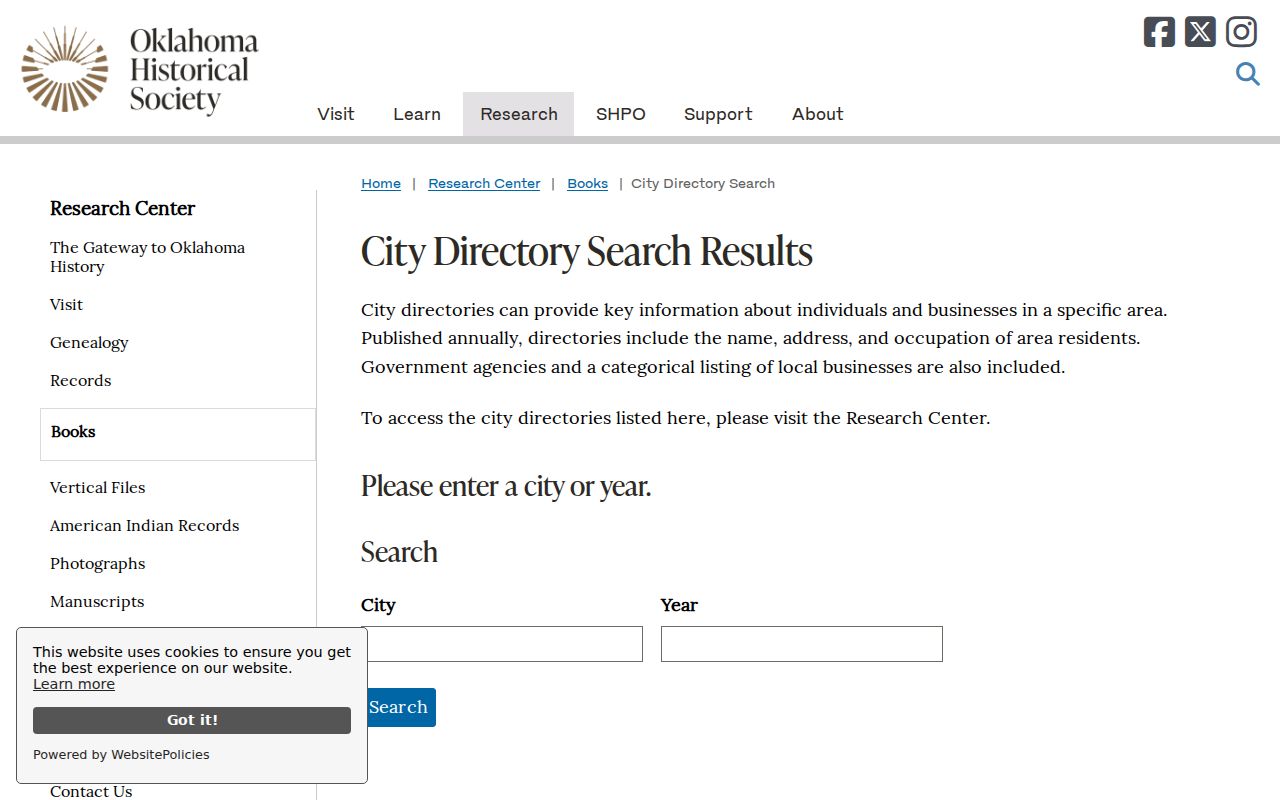
Pair a directory entry with a deed, census, obituary, or map before treating it as proof of a household’s full history.
Ardmore Library Name Trails
Ardmore Public Library is the practical local bridge between an Ardmore name and a historical record. Its genealogy resources point to digitized Ardmore High School yearbooks from 1905 into the 2000s, cemetery names, funeral-home obituaries, newspaper and history links, and tribal resources. The Oklahoma Collection and McGalliard collection add local photographs and documents. Physical papers are generally archival material, and attribution rules apply.
The library is at 320 E Street NW and lists research assistance during Monday through Thursday hours of 9 to 8 and Friday through Saturday hours of 9 to 5. The Oklahoma Historical Society Research Center adds city directories, telephone books, newspapers, certificates, cemetery books, and county histories. Its access is free, while paid research and copy service are separate from phone research.
The Ardmore Library genealogy resources show the local starting point for a historical name trail.
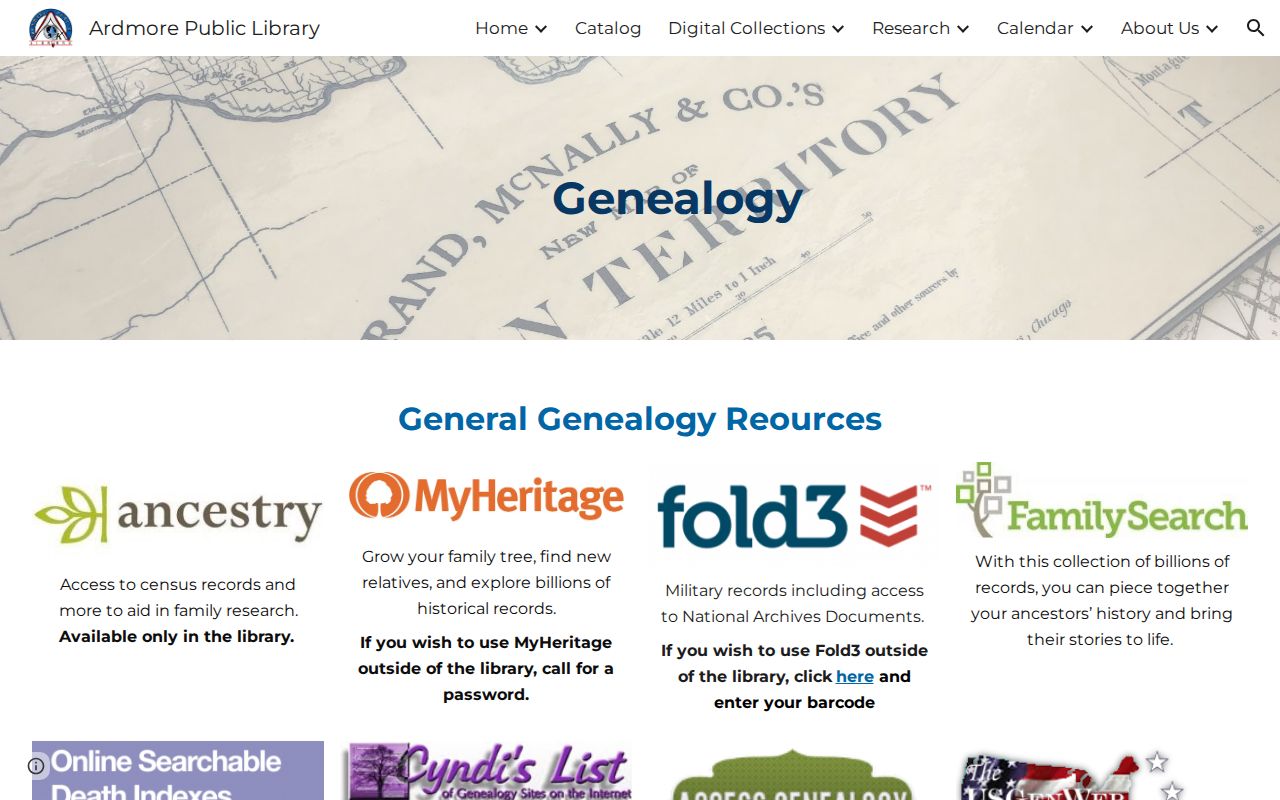
Library circulation history, private genealogy notes, and personal submissions remain private even when a collection can help locate public historical sources.
Ardmore Records Need Context
Ardmore’s history creates useful time markers. The 1895 fire led to a rebuilt brick and stone cityscape, while the September 1915 casinghead-gas explosion killed 43 people and generated more than 1,700 claims, according to Oklahoma Historical Society material. Those dates can focus a newspaper, map, cemetery, court, or business search. They do not establish that a particular building file or personal record survived.
Before statehood, the area’s record geography can appear as Ardmore, Carter County, Chickasaw Nation, or Indian Territory. Carter County formed in 1907. The Oklahoma Historical Society notes that Indian Territory judicial recording-district books were generally not preserved by state counties, so an early land question may need territorial court, abstract, deed-reference, or archival research rather than a modern county-index result.
For an Ardmore family, that context changes the search terms worth trying. An Ardmore newspaper notice may use a railroad, oil-field, civic, or old territorial reference instead of a modern neighborhood label. An Ardmore street can also carry a postal city, county parcel, and legal-description identity at the same time. Preserve the exact wording from each source, then compare dates before connecting an Ardmore name to an address or household.
Note: Keep a source date beside every name, address, and record type because Ardmore’s boundaries, street descriptions, and custodians can change across eras.